
Puppy weight calculator
Enter your puppy’s age and weight to see how big it will get. Works for 336 breeds and for mixed breeds.
Growth curves built from 4.2 million puppy weigh-ins
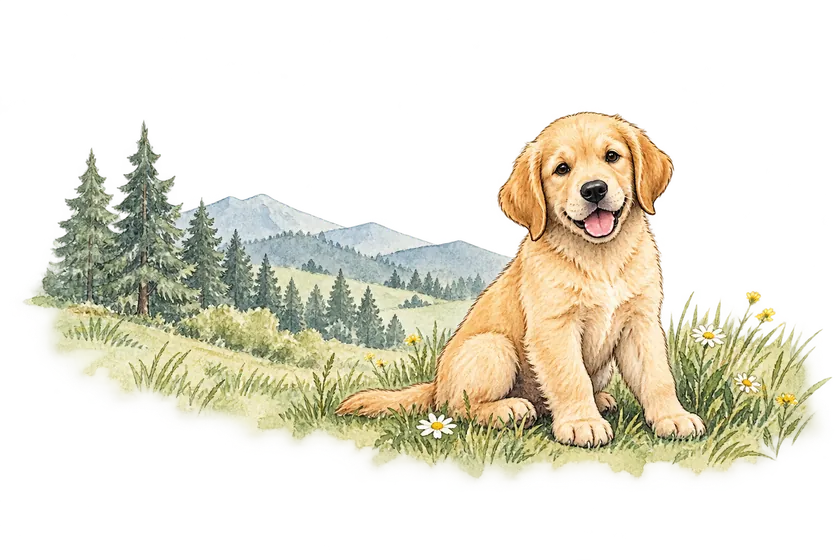 Big adventures ahead!
Calculators
Quick answers for common dog and cat questions. Each one shows its working and its sources.
 How big will my puppy get?For mixed breeds and rescues: size from age and weight alone.
 Puppy growth chartWeight by age for every adult size, on one chart.
 Dog weight calculatorIs an adult dog inside its breed's weight range?
 Dog age calculatorDog years to human years, adjusted for size.
 Cat age calculatorCat years to human years, with life stages.
 Cat food calculatorHow many calories and cans of food your cat needs a day.
 Kitten weight chartWeight by age from birth to 18 months, and whether your kitten is on track.
 Cat pregnancy calculatorDue date and vet-check calendar for cats.
 Dog food calculatorHow many calories and cups of food your dog needs a day.
 Chocolate toxicity calculatorDog ate chocolate? See how serious the dose may be.
 Dog pregnancy calculatorDue date and vet-check calendar.
 Dog heat cycle calculatorWhen her next heat is likely, and how long it lasts.
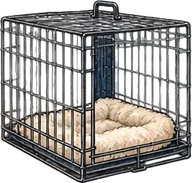 Crate size calculatorCrate length and height from your dog's measurements.
 Collar size calculatorCollar size from a neck measurement.
Popular breeds
All 336 breedsWeight-by-age tables and a breed profile for every breed and popular mix.
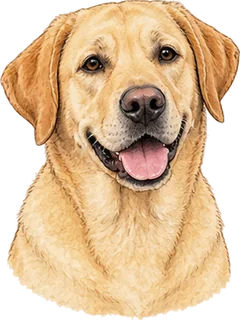 Labrador Retriever
 Golden Retriever
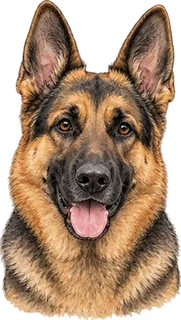 German Shepherd Dog
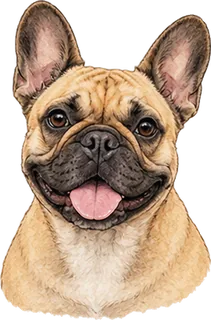 French Bulldog
 Poodle (Standard)
 Beagle (15-inch)
 Dachshund (Standard)
 Rottweiler
 Puppy Weight Formulas Tested on Real Vet RecordsThe weeks-times-52 formula overestimated adult weight for most puppies, and doubling at 16 weeks came in low for large breeds. Here is how each rule did on 190,870 dogs the curves never saw.
 How Much to Feed a Puppy by Age and WeightDaily calories, cups, and meals for puppies from 8 weeks to adulthood, worked out from current weight and age, with the extra rules large and giant breeds need.
 When Do Dogs Stop Growing?Small dogs reach about 90% of adult weight by 10 months, while large and giant breeds keep gaining until about 18 months. Height stops first, weight follows, and filling out can take two years or more.
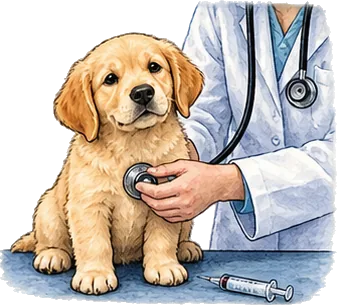 Puppy Vaccine Schedule: Which Shots, and WhenCore puppy vaccines start at 6 to 8 weeks and repeat every 2 to 4 weeks until after 16 weeks, with lepto, rabies, and 1-year boosters on top. Here is the AAHA timeline, a worked calendar, and how to socialize safely in the meantime.
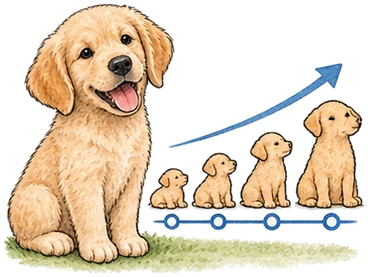 Puppy Weight Gain by WeekPuppies put on the most pounds per week between about 2 and 5 months of age, and by the second half of the first year many small dogs barely gain at all. The normal ranges below, for six size groups, come from our analysis of 3.0 million pairs of weigh-ins at US vet clinics.
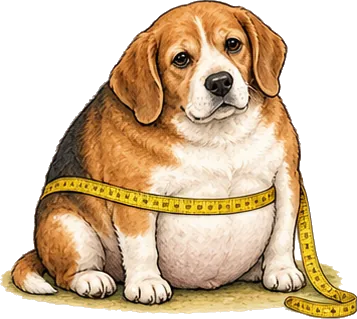 Is My Dog Overweight? How to Check and How to Fix ItUse a hands-on rib, waist, and belly check to score your dog from 1 to 9, turn that score into a goal weight, and set a calorie budget that takes off 1% to 2% a week.
How it works
- Pick your puppy's breed, or leave it blank for a mixed breed.
- Enter age and today's weight. Weigh at the same time of day for consistent numbers.
- The calculator compares your puppy with how dogs of its size typically grow, then shows the likely adult weight, a range, and the projected weight at later ages.
A worked example
A 16-week-old Labrador Retriever puppy weighs 30 lb. The calculator estimates about 73 lb as an adult, with a likely range of 59 to 95 lb, and notes that this is in line with the AKC’s 55 to 80 lb for the breed. The range runs past the top of the standard because plenty of pet Labs finish heavier than the standard describes, and the estimate is built from real dogs, not show standards. Weigh again at 5 or 6 months and the range will narrow.
How accurate is it?
We checked the method on dogs it hadn't been fitted to: the typical miss was about 11% of adult weight, and around 4 in 5 dogs ended inside the range. Younger puppies are harder to call.
| Puppy age | Known breed: typical miss | Inside range | Mixed breed: typical miss | Inside range |
|---|---|---|---|---|
| 08–11 weeks | 17.9% | 78.9% | 21.2% | 80.8% |
| 12–15 weeks | 14.9% | 79.0% | 16.6% | 80.7% |
| 16–25 weeks | 11.7% | 79.0% | 12.4% | 80.3% |
| 26–38 weeks | 8.9% | 79.6% | 9.1% | 80.2% |
| 39–52 weeks | 6.9% | 79.5% | 7.0% | 79.8% |
Held-out test, 1.9 million weigh-ins. Full methods.
We tested the popular shortcuts too
Rules such as “weight ÷ age in weeks × 52” and “double the weight at 6 months” turn up on popular calculator and pet-care sites. Scored on the same kind of held-out dogs, the weeks-times-52 formula overestimated adult weight by more than 20% for 84% of 16-week-old puppies, and doubling at 16 weeks came in low for large and giant breeds. See the full test and results by size.
Common questions
How accurate is the puppy weight calculator?
We tested it on weigh-ins from dogs the method had never seen. The typical miss was about 11% of adult weight, and roughly 4 in 5 dogs finished inside the range shown. Accuracy improves with age: the typical miss is around 18% at 8 to 11 weeks and 7% after 9 months. The results table on the methods page has the full numbers.
How early can you predict a puppy's adult weight?
From 8 weeks, but treat anything before 12 weeks as a rough guide. Puppies grow in bursts, so a single early weigh-in can mislead. Weigh your puppy at the same time of day each week and run the calculator again at 4 to 5 months, when the range tightens a lot.
Does it work for mixed breeds?
Yes. Leave the breed blank and it works backwards from your puppy's age and weight alone, using the growth patterns of dogs of every size. The range is wider than for a known breed, because the calculator can't see how big the parents were.
Is the quick formula, weight divided by age in weeks times 52, good enough?
Not for puppies. It treats growth as a straight line, which it isn't. In our tests on 12 to 25 week puppies it was off by roughly 22% to 66% depending on adult size, against 11% to 13% for the curves used here.
What if my puppy is above or below the range for its breed?
That's common. Breed standards describe typical adults, and plenty of healthy dogs sit outside them. Body shape tells you more than the number: you should be able to feel the ribs under a thin layer of fat. If you're worried, ask your vet.
Growth curves: our analysis of Salt et al. (2017), PLOS ONE, CC BY 4.0. An estimate, not veterinary advice.
