

Gamekeepers on one Scottish Highland estate kept breeding records from about 1835 to 1890, so the Golden Retriever's origin is unusually well documented. The result was a sturdy, medium-size gundog with a dense gold coat and a feathered tail. Goldens tend to keep a playful, puppyish streak well into adulthood.
Golden Retriever weight by age
| Age | Male | Female |
|---|---|---|
| 2 months | 13 lbrange 9.2–18 lb | 12 lbrange 8.2–16 lb |
| 3 months | 22 lbrange 16–28 lb | 19 lbrange 14–25 lb |
| 4 months | 31 lbrange 24–38 lb | 27 lbrange 21–34 lb |
| 5 months | 40 lbrange 33–49 lb | 36 lbrange 29–43 lb |
| 6 months | 47 lbrange 38–56 lb | 42 lbrange 34–50 lb |
| 8 months | 57 lbrange 48–66 lb | 50 lbrange 43–57 lb |
| 10 months | 62 lbrange 53–70 lb | 54 lbrange 46–60 lb |
| 12 months | 64 lbrange 56–72 lb | 56 lbrange 49–62 lb |
Half of adult weight comes by about 4 months, 90% by about 11 months and 95% by about 15 months.
Adult weight
AKC breed page: 65-75 pounds (male), 55-65 pounds (female).
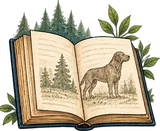 About the Golden Retriever
Dudley Marjoribanks, the first Lord Tweedmouth, developed the breed at his Guisachan estate in Inverness-shire during Queen Victoria's reign. He wanted a retriever that could handle wet weather and rough ground, so he crossed a yellow retriever with the Tweed Water Spaniel, a breed now extinct, and also brought in Irish Setter and Bloodhound. Goldens first entered a British show ring in 1908, and dogs reached America through Canada around the same time. Hunters liked their work and show fans liked their looks. Popularity in the United States jumped in the 1970s, when President Gerald Ford's Golden, Liberty, was in the news. The breed still works as a hunting dog, guide dog, and search-and-rescue dog.
 Build, coat and exercise
Goldens are muscular and move with a smooth, powerful stride. The thick, water-repellent double coat has one or two heavy sheds a year and moderate shedding in between. One or two slicker-brush sessions a week usually keep up; during a heavy shed, brush daily. After a bath, let the coat dry completely before brushing. Check ears weekly for infection. Like most sporting breeds, they need a good amount of daily exercise, and swimming and fetching come naturally. Without it, they find their own entertainment.
 Raising a Golden Retriever puppy
Goldens are eager to please and among the easier puppies to train. Gentle exposure to many people, places, and situations between about 7 weeks and 4 months sets them up well, and puppy classes add structure. The breed stays playful as it matures, so manners training is worth keeping up past the first year. Before starting a young Golden on long runs, bike outings, or other high-impact work, the AKC suggests checking with your vet because of the stress on bones and joints. Some Goldens get heavy, so keep treats modest.
 Health and care notes
- Hip and elbow dysplasia. Abnormal joint development can cause pain and arthritis. Ask for OFA hip and elbow results on both parents.
- Eye disease. Juvenile cataracts, pigmentary uveitis, and progressive retinal atrophy all occur in the breed. The parent club recommends eye exams by a veterinary ophthalmologist for breeding dogs.
- Subvalvular aortic stenosis. This narrowing below the aortic valve makes the heart work harder. A cardiac exam on the parents is one of the club's recommended screenings.
- Neuronal ceroid lipofuscinosis (NCL5). An inherited nervous system disease. A DNA test for the Golden Retriever form is available, and the club includes it in its recommended tests.
See Large-breed puppy food on Amazon. As an Amazon Associate we earn from qualifying purchases.
Breed background: AKC: Golden Retriever breed page; AKC Sporting Group health testing requirements. Weight standard: AKC breed page. Growth curves: our analysis of Salt et al. (2017) data. Methods.
