
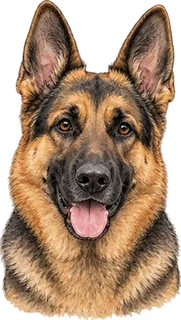
German Shepherds were built for the sheep pasture, not the police academy, and their smooth, ground-covering trot still shows it. A male stands 24 to 26 inches, and seen from the side the dog is all long curves rather than angles. GSDs attach deeply to their own family and tend to keep strangers at a polite distance.
German Shepherd Dog weight by age
| Age | Male | Female |
|---|---|---|
| 2 months | 14 lbrange 9.7–19 lb | 12 lbrange 8.2–16 lb |
| 3 months | 23 lbrange 17–30 lb | 19 lbrange 14–25 lb |
| 4 months | 33 lbrange 26–41 lb | 27 lbrange 21–34 lb |
| 5 months | 44 lbrange 35–53 lb | 36 lbrange 29–43 lb |
| 6 months | 51 lbrange 42–61 lb | 42 lbrange 34–50 lb |
| 8 months | 63 lbrange 53–72 lb | 50 lbrange 43–57 lb |
| 10 months | 68 lbrange 58–77 lb | 54 lbrange 46–60 lb |
| 12 months | 70 lbrange 61–79 lb | 56 lbrange 49–62 lb |
Half of adult weight comes by about 5 months, 90% by about 11 months and 95% by about 17 months.
Adult weight
AKC breed page: 65-90 pounds (male), 50-70 pounds (female).
 About the German Shepherd Dog
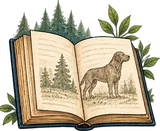
Until the late 1800s, German herding dogs varied from one district to the next. Captain Max von Stephanitz, a cavalry officer, set out to fix the ideal herder by crossing strains from northern and central Germany. He co-founded the first club for the breed and spent 35 years shaping it. As herding work declined, he promoted the dogs for police and military jobs, which is where most people now picture them. Canine film stars Rin-Tin-Tin and Strongheart boosted American interest in GSDs during the early 1900s. Anti-German feeling during World War I led British fanciers to call the breed the Alsatian, a name some still use.
 Build, coat and exercise
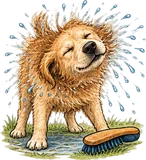
The coat is a medium-length double coat: a dense, harsh outer layer over a softer undercoat. Brushing every few days handles most of the year, but once or twice a year the dog sheds heavily and needs more frequent brushing. Baths are occasional. Nails should be trimmed or ground monthly if they don't wear down. This is a very active, athletic breed. A GSD without enough physical and mental work gets frustrated and finds its own outlets. Herding, tracking, agility, and dock diving all suit it.
 Raising a German Shepherd Dog puppy
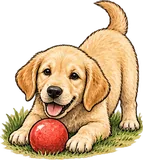
Socialization and puppy classes are vital for this breed, and obedience work should continue after puppyhood. GSD puppies respond best to consistent, reward-based training. Start with short daily walks and play sessions inside a fenced area, and keep a young dog on leash outside it. Because the breed bonds so tightly to its people, it does best raised in the house and included in family routines. That natural aloofness with outsiders makes steady exposure to new people especially useful. Owners should also learn the signs of bloat, which can strike this deep-chested breed.
 Health and care notes
- Hip and elbow dysplasia. Poorly formed joints can lead to pain and arthritis. The German Shepherd Dog Club of America recommends hip and elbow evaluations, so ask for the parents' results.
- Degenerative myelopathy. A slowly progressing spinal cord disease that causes hind-end weakness. Ask whether the parents were screened.
- Bloat. The abdomen swells suddenly and the condition can kill. Learn the warning signs and have an emergency vet plan before you need one.
See Large-breed puppy food on Amazon. As an Amazon Associate we earn from qualifying purchases.
Breed background: AKC: German Shepherd Dog breed page; AKC Herding Group health testing requirements. Weight standard: AKC breed page. Growth curves: our analysis of Salt et al. (2017) data. Methods.
