
Long before Lassie, the Collie was a Scottish sheepherding dog. It is a big herder that stays light and supple, 22 to 26 inches tall, with a refined wedge-shaped head and mobile ears. The breed comes in two coat varieties, rough and smooth, and four colors: white, blue merle, tricolor, or sable and white.
Collie weight by age
| Age | Male | Female |
|---|---|---|
| 2 months | 13 lbrange 9.0–17 lb | 11 lbrange 7.9–16 lb |
| 3 months | 21 lbrange 15–27 lb | 19 lbrange 13–24 lb |
| 4 months | 30 lbrange 23–37 lb | 26 lbrange 20–33 lb |
| 5 months | 39 lbrange 32–48 lb | 34 lbrange 28–42 lb |
| 6 months | 46 lbrange 37–55 lb | 40 lbrange 33–48 lb |
| 8 months | 56 lbrange 47–64 lb | 48 lbrange 41–55 lb |
| 10 months | 60 lbrange 51–68 lb | 52 lbrange 45–58 lb |
| 12 months | 62 lbrange 54–69 lb | 54 lbrange 47–59 lb |
Half of adult weight comes by about 4 months, 90% by about 11 months and 95% by about 15 months.
Adult weight
AKC breed page: 60-75 pounds (male), 50-65 pounds (female).
 About the Collie
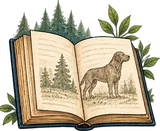
Herding dogs likely arrived in Britain with the Romans in the first century and mixed with local stock over the following centuries. Written mentions start around 1800, about when Thomas Bewick's woodcuts in his history of quadrupeds gave the type some of its earliest pictures. One theory ties the name to colley, a strain of black-faced sheep. Queen Victoria fell for the breed during stays at Balmoral in the second half of the 1800s, and its rise from farm dog to fashionable pet followed. The Collie Club of America, formed in 1886, became the AKC's second member parent club. Albert Payson Terhune's Sunnybank stories and Eric Knight's 1940 novel Lassie Come-Home made it a household name.
 Build, coat and exercise
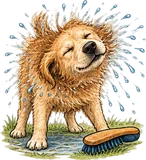
The Collie is strong and active without bulk, with a deep chest and shoulders that slope back. Both coats are double. The rough coat needs brushing to the skin once a week, with extra attention behind the ears and elbows where mats form. The smooth coat won't mat but still sheds undercoat that needs brushing out. Shedding often follows a pattern: spayed females drop coat about once a year, intact females around three months after a heat, and males near their birthday. Collies need regular aerobic exercise and a chance to run, and they get bored and bark if left in the yard.
 Raising a Collie puppy
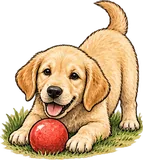
The AKC's minimum health step for Collies is an eye exam from a board-certified veterinary eye specialist when puppies are 6 to 8 weeks old, looking for Collie eye anomaly. Ask to see the certificate. Find out the puppy's MDR1 status too, because some Collies react badly to certain drugs, including the antidiarrheal loperamide (Imodium) and the high ivermectin doses used to treat mange. Standard heartworm-preventive doses are considered safe. Collies learn fast and enjoy it, so continue training past puppy classes using positive methods. Collies want to be with their family, not outside alone.
 Health and care notes
- Collie eye anomaly. The AKC's minimum health step for the breed is a puppy eye exam at 6 to 8 weeks, done by a boarded eye specialist, to check for this inherited defect. Ask the breeder for that puppy-age certificate.
- MDR1 drug sensitivity. Collies with this mutation can have serious neurologic reactions to loperamide, high-dose ivermectin, and several sedatives and cancer drugs, per the Collie Health Foundation. An MDR1 DNA test is a CHIC requirement; give the result to your vet.
- Progressive retinal atrophy (rcd2). Collies have their own form, rcd2, and a DNA test for it is one of only three Collie CHIC requirements. Puppies from two tested parents can be cleared by parentage.
- Dermatomyositis. An inherited skin and muscle disease. A DNA test is part of the CHIC requirements, so ask for both parents' results.
See Large-breed puppy food on Amazon. As an Amazon Associate we earn from qualifying purchases.
Breed background: AKC: Collie; OFA CHIC requirements: Collie; Collie Health Foundation: Multidrug sensitivity. Weight standard: AKC breed page. Growth curves: our analysis of Salt et al. (2017) data. Methods.
