
On the Shetland Islands, where food was scarce and winters harsh, farmers wanted a herding dog that ate less, so they bred one small. The result looks like a rough Collie in miniature, standing 13 to 16 inches with a long, harsh coat and three-quarter erect ears. Islanders called it the toonie dog, from a local word for farm.
Shetland Sheepdog weight by age
| Age | Typical weight |
|---|---|
| 2 months | 5.1 lbrange 3.5–6.9 lb |
| 3 months | 7.7 lbrange 5.5–10 lb |
| 4 months | 10 lbrange 7.9–13 lb |
| 5 months | 13 lbrange 10–16 lb |
| 6 months | 15 lbrange 12–18 lb |
| 8 months | 17 lbrange 14–20 lb |
| 10 months | 18 lbrange 15–20 lb |
| 12 months | 19 lbrange 16–21 lb |
Half of adult weight comes by about 4 months, 90% by about 10 months. The last few percent come on slowly after that.
Adult weight
AKC breed page: 15-25 pounds.
 About the Shetland Sheepdog
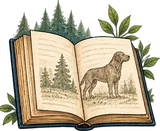
Shelties herded sheep, ponies, and poultry on the rocky islands at the northern tip of the United Kingdom. The same pressure that kept Shetland ponies small kept these dogs small. Exactly when mainland Collies reached the islands and were bred down is unknown, because local breeders left no written records. Isolation also kept the breed little known elsewhere in Britain before the early 1900s. The Kennel Club recognized it in 1909 under the name Shetland Collie, and Collie breeders pushed for a name change soon after. The AKC registered its first Sheltie, an import named Lord Scott, in 1911, and the American Shetland Sheepdog Association formed at Westminster in 1929.
 Build, coat and exercise
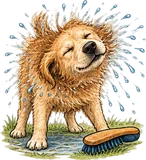
Under all that hair is a deep-chested, level-backed dog and a long head shaped like a wedge. The double coat has a long, straight, harsh outer layer over a very dense, short undercoat, and it sheds heavily. Brush weekly and more often in shedding season, checking for mats behind the ears, behind the elbows, and on the trousers below the tail. Don't shave a Sheltie; the coat shields the dog from sun and heat, not just cold. Exercise needs are moderate. Shelties adapt to city living when they get enough activity, and they excel in agility, obedience, herding, and tracking.
 Raising a Shetland Sheepdog puppy
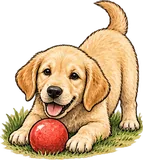
Shelties are quick to learn and eager to please, which makes puppy classes a good investment. Plan to teach a quiet cue early, because the breed is vocal and expresses excitement by barking. Like other herders, they want to chase moving things, cars included, so keep puppies on leash and in a well-fenced yard. They tend to be reserved with strangers and sensitive to the mood at home, so steady, positive socialization helps. Get a puppy used to being brushed, including behind the ears and elbows, long before it carries a full coat.
 Health and care notes
- Eye disease. The breed's CHIC program requires a DNA test for BBS2 progressive retinal atrophy plus regular eye exams, yearly until age 5. Ask for the BBS2 result and the latest eye exam on each parent.
- Hip dysplasia. Hips are one of the three required tests for a Sheltie CHIC number, and either an OFA X-ray or PennHIP counts. Ask which the parents had and see the results on the OFA site.
- Dermatomyositis. An inherited skin and muscle disease, sometimes called Sheltie skin syndrome. OFA offers a DMS gene test as one of the breed's elective screenings; ask whether it was done.
- Von Willebrand's disease. An inherited bleeding disorder. A DNA test is available, and OFA lists it among the breed's elective CHIC screenings; ask whether the parents were tested.
See Small-breed puppy food on Amazon. As an Amazon Associate we earn from qualifying purchases.
Breed background: AKC: Shetland Sheepdog; OFA CHIC requirements: Shetland Sheepdog. Weight standard: AKC breed page. Growth curves: our analysis of Salt et al. (2017) data. Methods.
