
Standing no more than 14 inches tall, the Basset Hound carries more bone for its size than any other breed, according to its standard. That low, heavy frame was built to follow a scent slowly and steadily over rough ground with a hunter on foot behind. Breed lore holds that only the Bloodhound has a more accurate nose.
Basset Hound weight by age
| Age | Typical weight |
|---|---|
| 2 months | 11 lbrange 7.3–15 lb |
| 3 months | 17 lbrange 12–23 lb |
| 4 months | 24 lbrange 19–30 lb |
| 5 months | 32 lbrange 26–38 lb |
| 6 months | 37 lbrange 30–44 lb |
| 8 months | 44 lbrange 38–50 lb |
| 10 months | 47 lbrange 41–53 lb |
| 12 months | 49 lbrange 43–54 lb |
Half of adult weight comes by about 4 months, 90% by about 10 months and 95% by about 14 months.
Adult weight
AKC breed page: 40-65 pounds.
 About the Basset Hound
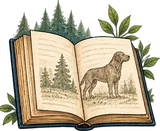
The name comes from the French bas, meaning low. Bassets were developed in France and Belgium, and monks at the St. Hubert abbey are believed to have mixed older French hound strains to produce a short-legged scent hound for trailing rabbit and deer. Their accuracy on a track made them popular with French aristocrats who hunted their estates. Lafayette is said to have given Bassets to George Washington after the Revolution. A Basset puppy appeared on the cover of Time in 1928, and the Basset Hound Club of America formed in 1935. The breed's pack-hunting past still shows: Bassets enjoy other dogs, keep their own counsel on a trail, and bay in a loud, ringing voice.
 Build, coat and exercise
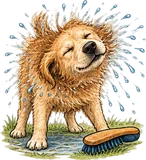
Everything about the Basset is long and low: a domed head, very long ears, loose skin on the brow, short powerful legs, and big paws. Movement is deliberate rather than fast, and the breed has real stamina. The short, smooth coat sheds more than it looks like it would, so go over the dog at least weekly with a soft brush or shedding tool. Bathe occasionally and trim nails regularly. Exercise needs are moderate; a daily walk at an easy pace usually covers it, and steady exercise helps prevent weight gain.
 Raising a Basset Hound puppy
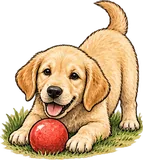
Basset puppies were bred from dogs that hunted on their own and ignored distractions on a track, so they can seem uninterested in commands. They can be trained; it takes time, consistency, and patience. Treats and early socialization make a big difference, and positive obedience work should continue as the dog matures. Make regular walks a habit early to keep weight in check. Start weekly ear checks early; head shaking or ear scratching is a reason to see the vet. Get the puppy used to tooth brushing too, which the AKC recommends at least twice a week.
 Health and care notes
- Primary open angle glaucoma. Glaucoma is the first of three DNA tests in the Basset's CHIC program, which checks for the breed's inherited open-angle form, in which eye pressure creeps up and slowly damages sight. Ask for both parents' POAG results, and AKC also lists glaucoma among the breed's screened conditions.
- Thrombopathia. An inherited bleeding disorder caused by platelets that don't work properly. A DNA test is part of the breed's CHIC requirements; ask the breeder for results.
- Mucopolysaccharidosis I. A rare inherited metabolic disease. OFA requires a DNA test for MPS I in breeding Bassets, so ask whether the parents are clear or carriers.
- Ear infections. The long, droopy ears limit air flow. Check them often, and see a vet if your dog shakes its head or scratches at its ears.
See Large-breed puppy food on Amazon. As an Amazon Associate we earn from qualifying purchases.
Breed background: AKC: Basset Hound; OFA CHIC requirements: Basset Hound. Weight standard: AKC breed page. Growth curves: our analysis of Salt et al. (2017) data. Methods.
