
Australian Cattle Dog puppies are born white, and the coat turns blue-gray or red as they grow, usually with mottling or speckles. Behind the color is a herder made for the hot, rough Australian interior, where imported British dogs could not keep up. Many people still call it the Blue Heeler or Queensland Heeler.
Australian Cattle Dog weight by age
| Age | Typical weight |
|---|---|
| 2 months | 9.0 lbrange 6.2–12 lb |
| 3 months | 14 lbrange 10–19 lb |
| 4 months | 20 lbrange 15–25 lb |
| 5 months | 26 lbrange 21–32 lb |
| 6 months | 30 lbrange 25–36 lb |
| 8 months | 36 lbrange 30–41 lb |
| 10 months | 38 lbrange 33–43 lb |
| 12 months | 40 lbrange 35–44 lb |
Half of adult weight comes by about 4 months, 90% by about 10 months and 95% by about 14 months.
Adult weight
AKC breed page: 35-50 pounds.
 About the Australian Cattle Dog
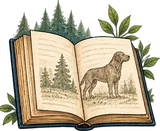
In the early 1800s, Anglo-Australian ranchers pushed inland to raise beef cattle across huge distances. Their first herding dogs, a British type called the Smithfield, wilted in the heat and terrain. Stockmen began crossing them with Dingoes and other breeds. In Queensland, George Elliott crossed Collies with Dingoes and supplied the puppies to local farmers. Later, brothers Jack and Harry Bagust added Dalmatian blood, and a Black and Tan Kelpie was also worked in. The finished dog moved cattle to market for a growing beef industry. AKC admission followed in 1980, and when AKC created its Herding Group in 1983, the ACD was one of the founding breeds.
 Build, coat and exercise
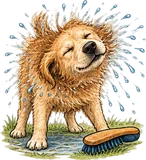
Sturdy and hard-muscled, standing 17 to 20 inches, with a smooth double coat that stays free of oily buildup and doggy smell. A quick weekly brushing usually does it. Twice a year the undercoat sheds out, and then a thorough brush-out every few days with a short-bristle brush keeps hair under control. Energy is very high. A yard and a walk will not cover it; daily runs, herding, or a sport like agility give the drive somewhere to go. Expect a dog that is wary of strangers.
 Raising an Australian Cattle Dog puppy
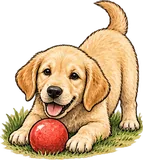
Socialization and obedience work need to start early and keep going. A smart, energetic young heeler with nothing to do gets bored, and boredom turns destructive. Ongoing training in obedience, herding, or agility takes real time, but it builds the bond this breed wants. Ask the breeder about hearing. The parent club calls for BAER hearing tests, and puppies can be checked in each ear at 6 to 8 weeks. DNA tests for eye disease can also be run on puppies.
 Health and care notes
- Congenital deafness. Some dogs are born deaf in one or both ears. A BAER test measures hearing in each ear and can be done on puppies at 6 to 8 weeks; ask for the litter's results.
- Progressive retinal atrophy (prcd-PRA). The club's Breeder of Heart rules require this DNA test. In ACDs the vision loss typically shows up in middle age or later, long after a puppy goes home, so the test result matters more than a normal-looking eye. Puppies can be tested too.
- Primary lens luxation. The lens slips out of place because its supporting fibers break down, which is painful and can cause glaucoma. Cornell lists this breed as predisposed; a sudden red, cloudy, or painful eye needs emergency care, and a DNA test is available.
- Hip and elbow dysplasia. The Australian Cattle Dog Club of America requires hip X-rays on both parents, read by OFA or OVC at 2 years or by PennHIP from 1 year, plus elbow films at 2 or older. Ask to see both parents' paperwork.
See Medium-breed puppy food on Amazon. As an Amazon Associate we earn from qualifying purchases.
Breed background: AKC: Australian Cattle Dog breed page; Australian Cattle Dog Club of America health testing requirements; Cornell Riney Canine Health Center: Primary lens luxation. Weight standard: AKC breed page. Growth curves: our analysis of Salt et al. (2017) data. Methods.
