
Julius Caesar noted the huge dogs that helped defend Britain against his legions in 55 B.C., and the English Mastiff descends from that old British type. Males stand 30 inches or more at the shoulder. The body is deep and rectangular, the head broad with a black mask and wrinkled forehead, and the short coat is fawn, apricot, or brindle.
Mastiff weight by age
| Age | Male | Female |
|---|---|---|
| 2 months | 31 lbrange 21–41 lb | 23 lbrange 15–30 lb |
| 3 months | 52 lbrange 38–67 lb | 39 lbrange 28–50 lb |
| 4 months | 76 lbrange 59–95 lb | 57 lbrange 44–71 lb |
| 5 months | 104 lbrange 84–126 lb | 78 lbrange 62–94 lb |
| 6 months | 124 lbrange 100–146 lb | 92 lbrange 74–109 lb |
| 8 months | 154 lbrange 129–177 lb | 115 lbrange 96–132 lb |
| 10 months | 169 lbrange 142–189 lb | 125 lbrange 106–141 lb |
| 12 months | 177 lbrange 154–196 lb | 132 lbrange 114–146 lb |
Half of adult weight comes by about 5 months, 90% by about 12 months and 95% by about 18 months.
Adult weight
AKC breed page: 160-230 pounds (male), 120-170 pounds (female).
 About the Mastiff
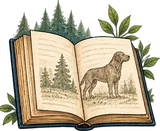
Mastiff-type dogs show up across the ancient world, from Egypt to China, but the AKC's Mastiff is the traditional giant of England, also known as the Old English Mastiff. After Caesar's invasion, British mastiffs were shipped to Rome to fight beasts and gladiators in the arena. In medieval England the breed took its modern shape as a big-game hunter, a night guard on estates, and a war dog; Mastiffs fought at Agincourt in 1415. Chaucer described them as being as big as a steer. When World War II ended, England was estimated to have just 14 Mastiffs left, and American breeders sent dogs back to rebuild the population. Today's Mastiff is calmer than its ancestors.
 Build, coat and exercise
Mastiffs are massive and well knit, with males heavier throughout than females. The short, dense coat needs just a fast brush-out every few days, plus a toothed comb during the once- or twice-yearly heavy sheds. Clean the ears and the deep facial wrinkles regularly. Mastiffs drool, and most owners keep cloths handy. Adults need modest exercise, roughly a mile or two of walking a day plus free play, and the breed can live in an apartment. Many will lie down mid-walk when tired or hot, so don't walk farther than you can manage to get them home.
 Raising a Mastiff puppy
Growing Mastiffs are easy to overdo. The AKC advises limiting a puppy of 2 to 3 months to half a block of walking at most, and keeping puppies and young adults off stairs, away from jumps, and off long walks. Obedience training and socialization are musts, since adults are naturally wary of strangers. Mastiffs learn quickly but get bored by repetition, so hold several short, varied sessions a day. Praise works; a raised voice hurts their feelings. Hygromas, soft cushions over the elbows from lying on hard floors, are common; the AKC calls them harmless and says not to have them drained.
 Health and care notes
- Hip and elbow dysplasia. Both are CHIC requirements for the Mastiff, which carries a lot of weight on its joints. Ask for the parents' OFA hip and elbow ratings, and follow AKC's advice to go easy on a growing puppy's exercise.
- Bloat. AKC lists bloat as a life-threatening risk in Mastiffs, where the stomach swells and often twists. Know the signs, such as a hard belly, restlessness, and unproductive retching, and treat them as an emergency.
- Heart disease. A cardiac exam is required for CHIC certification, and OFA recommends it be done by a cardiologist. Ask to see the parents' results.
- Cystinuria. Cystinuria testing is optional for CHIC in this breed. OFA describes two routes: a yearly urine test for intact males from 18 months of age, or a DNA marker test for the Type 3 form, so ask which the breeder used.
See Large-breed puppy food on Amazon. As an Amazon Associate we earn from qualifying purchases.
Breed background: AKC: Mastiff; OFA CHIC requirements: Mastiff. Weight standard: AKC breed page. Growth curves: our analysis of Salt et al. (2017) data. Methods.
