
German nobles once hunted wild boar with the Great Dane, a job that needed a dog big and brave enough to hold a dangerous animal. The name is misleading, since the breed was developed in Germany, not Denmark. Danes can reach 32 inches at the shoulder, and one standing on its hind legs is taller than most adults.
Great Dane weight by age
| Age | Male | Female |
|---|---|---|
| 2 months | 25 lbrange 17–33 lb | 20 lbrange 13–26 lb |
| 3 months | 42 lbrange 30–54 lb | 33 lbrange 24–43 lb |
| 4 months | 62 lbrange 48–77 lb | 49 lbrange 38–61 lb |
| 5 months | 84 lbrange 68–102 lb | 67 lbrange 54–81 lb |
| 6 months | 100 lbrange 81–118 lb | 80 lbrange 64–94 lb |
| 8 months | 124 lbrange 104–143 lb | 99 lbrange 83–114 lb |
| 10 months | 136 lbrange 115–153 lb | 108 lbrange 91–121 lb |
| 12 months | 143 lbrange 124–158 lb | 114 lbrange 99–125 lb |
Half of adult weight comes by about 5 months, 90% by about 12 months and 95% by about 18 months.
Adult weight
AKC breed page: 140-175 pounds (male), 110-140 pounds (female).
 About the Great Dane
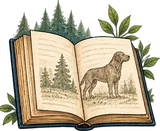
The breed was made in Germany, and German fanciers bred most of its best early dogs. The English name comes from the French grand Danois, or "big Danish," and nobody has found a real link to Denmark. In Germany it is simply the German dog. The type has been kept distinct for about 400 years or more, starting as a boar hound with mastiff roots; one old French name was dogue allemand, German mastiff. As boar hunting faded, Danes moved into the role of estate and household guardian. That shows in the modern dog, which is friendly with people it knows but alert at the door, and its size alone makes most strangers think twice.
 Build, coat and exercise
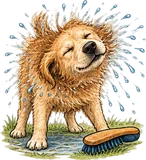
AKC describes a giant with elegance and balance and an easy, smooth stride. The coat is short and smooth, in several colors and patterns, harlequin among the best known. It sheds lightly most of the year, though on a dog this big that still adds up, and a heavier shed once or twice a year calls for daily brushing. Otherwise a weekly pass with a hound glove or rubber mitt is enough, with baths only when needed. Adults need two or three brisk walks a day. Keep them leashed or behind a tall fence, because a Dane will follow a scent.
 Raising a Great Dane puppy
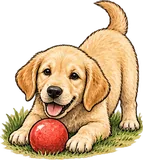
Dane puppies grow fast and often have growing pains. Panosteitis, an inflammation of the long bones, causes a limp that can move between legs; a vet can treat the pain, and puppies outgrow it. More serious bone disease in the breed is usually tied to nutrition, so diet deserves real attention. Wait until about age 2 before jogging or hiking to protect growing joints. Weight goes on easily and is hard to take off, and heavy Danes tend to live shorter lives. Obedience training is a must for a dog that will outweigh many adults, so start classes and socialization early.
 Health and care notes
- Bloat (gastric dilatation-volvulus). The stomach fills with gas and can twist, and the AKC calls it the leading killer of Danes. Feed two meals a day, avoid hard exercise around mealtimes, learn the warning signs, and ask your vet about a preventive gastropexy.
- Heart disease. OFA's CHIC program for the breed requires an advanced cardiac exam by a board-certified cardiologist that includes an echocardiogram. Ask to see those results for both parents.
- Hip dysplasia. Hips are the most-tested item in the breed, with over 19,000 Danes in the OFA database and about 12.5% rated dysplastic. CHIC accepts OFA or PennHIP, so ask for one or the other on the sire and dam.
- Autoimmune thyroiditis. AKC lists both hypothyroidism and autoimmune thyroiditis for Danes, and about 5% of the 9,000-plus Danes with OFA thyroid results were abnormal. A thyroid panel from an approved lab is required for CHIC.
See Large-breed puppy food on Amazon. As an Amazon Associate we earn from qualifying purchases.
Breed background: AKC: Great Dane; OFA CHIC requirements: Great Dane. Weight standard: AKC breed page. Growth curves: our analysis of Salt et al. (2017) data. Methods.
